

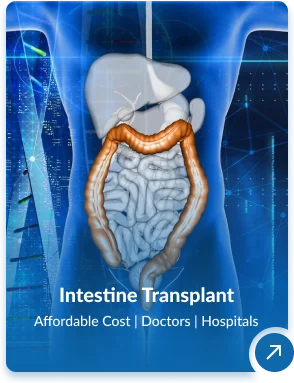
Intestine transplantation is a surgical treatment which is used to treat patients with intestinal failure and other issues associated with parenteral nutrition (PN). The conditions that may require an intestine transplant can be discovered at birth or as the child grows older.
Total Parenteral Nutrition (TPN)
For the human body, and the organs to operate properly, nutrients are required. If they can’t be consumed owing to intestinal failure, they’re given intravenously by complete parenteral nutrition, which involves inserting a catheter into the patient’s neck, arm, chest, or groin. Because using a catheter on a long-term basis increases the risk of infections, bone dislocation, and liver disease. As for that, Intestine Transplant in India has become the only long-term treatment that is for intestinal failure.
Intestine Transplant Cost in India are low as compared to other countries like the US, Russia, and the UK and patients seeking Intestine transplant in India have access to the greatest facilities, which provide reasonable healthcare packages, premium medical tools, and the assurance of first-rate medical personnel.
What Is Intestine Transplant
In the case of acute or chronic intestinal failure, an intestine transplant is performed, which involves surgically removing the diseased part of the small intestine and replacing it with a healthy small intestine from a donor.
One of the rarest types of organ transplants in India is intestine transplant. However, during the last decade and a half, the number of favorable outcomes and survival rates has progressively increased. Small bowel or small intestine transplant is another name for this procedure.
People who are dependent on TPN for an extended period of time may suffer and require a small intestine transplant. If children are placed on TPN for an indefinite period of time, they are more likely to develop major infections or liver problems.
What Is Intestine Failure
Intestinal failure occurs when the gut’s ability to absorb water, macronutrients, micronutrients, and electrolytes is compromised (IF).
The inability to absorb all of the above aspects will have a significant impact on one’s quality of life.
Acute IF (Phase 1 and 2) is the first stage of the disease and can persist anywhere from weeks to months.
What Are the Causes of Intestinal Failure
Before going into detail about the causes, it’s important to note that they can be classified as congenital or acquired, GI or systemic, benign or malignant.
Causes of Intestinal failure are based on the following gastrointestinal conditions: